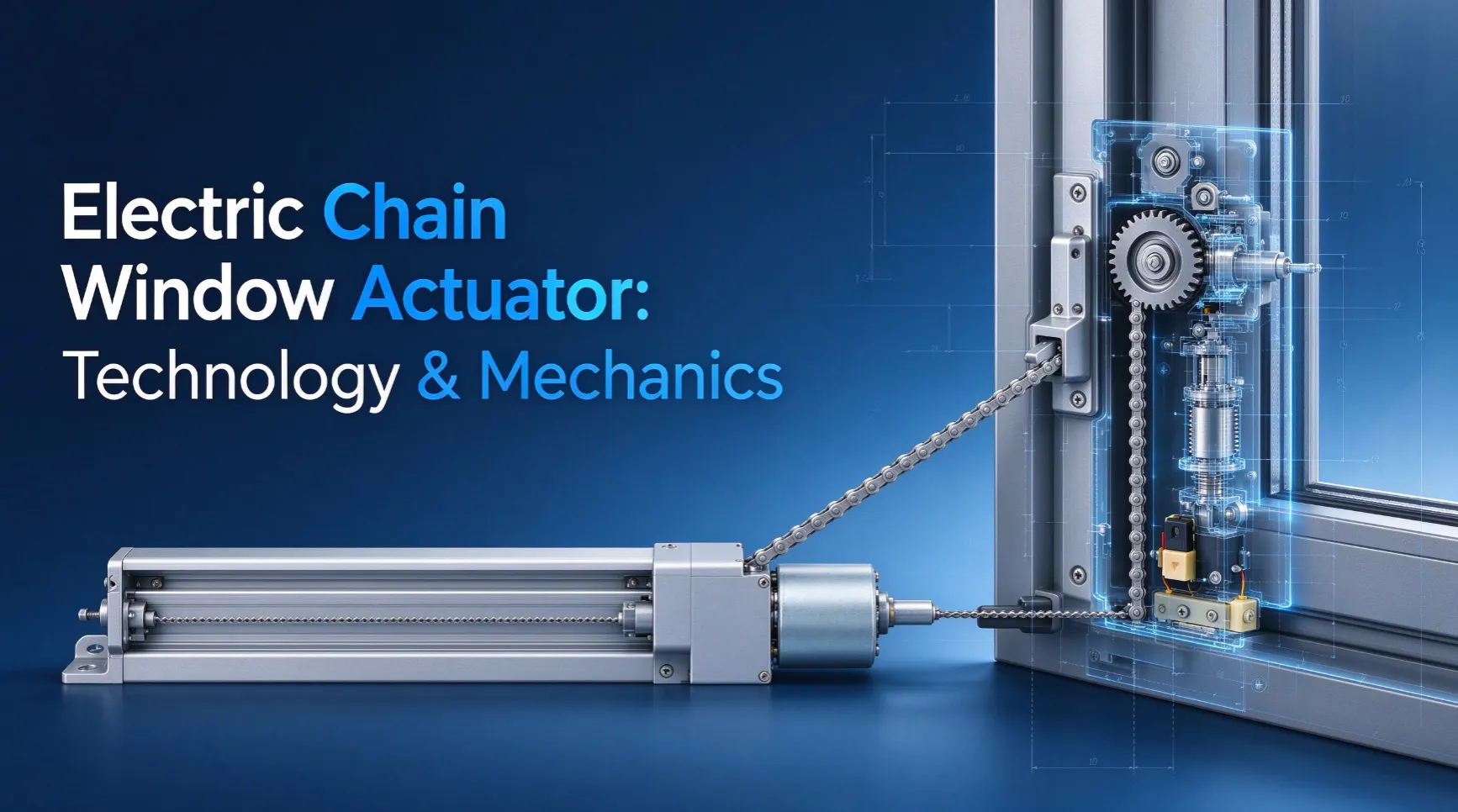
Modern buildings demand intelligent ventilation solutions. Facility managers and architects increasingly rely on automated hardware to control indoor climates and ensure fire safety. The electric chain window actuator serves as the core mechanical component in these smart systems.
This guide breaks down the structural design, operation methods, and essential technical parameters you need to understand before selecting a window automation solution.
What is an Electric Chain Window Actuator?
An electric chain window actuator is a motorized mechanical device that automates the opening and closing of building windows. It replaces manual hand cranks and extension poles, allowing users to control heavy or out-of-reach sashes via wall switches, remote controls, or automated building systems.
A standard actuator system contains four primary structural components:
- Extruded Aluminum Housing: Protects internal gears and electronic components from dust and corrosion.
- Drive Motor and Gearbox: Generates the precise mechanical torque required for movement.
- Rigid Link Chain: A specialized metallic chain that transfers pushing and pulling force to the window.
- Mounting Brackets: Secure the motor body to the window frame and the chain end to the sash.
How the System Works: Rigid Chain Mechanics
The mechanical brilliance of this actuator lies entirely in its unique chain design. Standard chains collapse under compression, making them useless for pushing objects. However, engineers design the actuator chain with specialized interlocking links.
When the motor turns the internal gears, it drives the chain outward. Because of the mechanical shape of the links, the chain can only bend in one specific direction. As it extends horizontally or vertically from the housing, it locks into a straight, rigid bar. This rigid form easily pushes the window sash outward against wind resistance and gravity.
When the system receives a closing command, the motor reverses direction. The internal gear pulls the rigid chain back into the casing. As the chain enters the housing, it bends along its flexible axis and coils neatly inside the compact aluminum body.
Key Technical Parameters for Actuator Selection
Choosing the correct electric chain window actuator requires matching specific technical parameters to your building’s architectural demands. Understanding these metrics ensures long-term operational stability.
1. Operating Voltage Configuration
Engineers specify actuators in two primary voltage configurations based on the application:
| Voltage Type | Primary Application | Key Advantage |
| 24V DC | Automatic Smoke Vent Windows | Operates safely on backup battery power during fire emergencies. |
| 110V – 230V AC | Daily Natural Ventilation | Wires directly into standard commercial building mains without transformers. |
2. Chain Stroke (Opening Distance)
The chain stroke defines the maximum distance the chain can extend. Standard commercial models offer adjustable strokes ranging from 300mm to 800mm. A longer stroke generates a wider window opening angle, which directly increases the aerodynamic free area for smoke exhaust and daily airflow.
3. Push and Pull Force
Manufacturers measure the motor’s mechanical strength in Newtons (N). Common actuator models generate dynamic push/pull forces of 400N, 600N, or 800N. High-force models easily lift heavy, double-glazed skylights or hold massive facade windows steady against strong coastal winds.
Supported Window Types and Configurations
A versatile electric chain window actuator adapts to almost any architectural window style through customized bracket configurations.
- Bottom-Hung Windows: Often deployed in smoke exhaust systems. The actuator mounts near the top frame and pulls the sash inward or pushes it outward, directing hot smoke upward and out of the building.
- Top-Hung (Awning) Windows: The motor secures to the bottom sill and pushes the base of the window outward. This design creates a natural canopy that blocks rain while allowing fresh air to circulate.
- Side-Hung (Casement) Windows: The actuator pushes the sash horizontally. Installers use specialized pivoting brackets to accommodate the unique swing arc of casement hinges.
- Skylights and Roof Windows: Heavy-duty chain actuators mount horizontally to lift heavy glass panels directly against gravity, quickly releasing trapped indoor heat.
Business Impact: Typical Application Scenarios
Investing in automated window hardware transforms how commercial spaces manage climate control and occupant safety.
- Fire and Smoke Ventilation: Building codes require large commercial structures to vent toxic smoke during a fire. Actuators link directly to central fire alarm panels. Upon detecting smoke, the 24V DC actuators instantly force the windows open, clearing escape routes.
- School and Auditorium Climate Control: Large assembly spaces suffer from rapid heat and carbon dioxide buildup. Automated high-level windows allow facility teams to flush the room with fresh air between events using a simple wall switch.
- Automated Factory Exhaust: Industrial plants integrate chain actuators with temperature and rain sensors. The system automatically opens roof vents to release machine heat, then rapidly closes them when sensors detect a sudden rainstorm.
FAQ
- What happens to the electric chain window actuator during a power failure?
If you install a 24V DC actuator connected to a certified fire control panel with battery backup, the system will continue to operate normally during grid power failures. AC-powered units require a separate generator circuit for backup operation. - How do I determine the correct stroke length for my window?
You calculate the required stroke length based on the window sash height and your target opening angle. Fire safety regulations typically dictate the required aerodynamic free area, which tells you exactly how far the window must open. - Can a single actuator operate a very wide window?
For windows exceeding 1.5 meters in width, architects use dual-chain actuators or two synchronized single-chain motors. This prevents the window sash from twisting or warping under uneven pressure. - Are these window actuators suitable for outdoor environments?
Standard indoor models carry an IP32 or IP42 rating, making them ideal for controlled environments. For applications exposed directly to rain or harsh weather, you must specify specialized outdoor actuators with an IP55 or higher ingress protection rating. - How much weight can a 400N actuator push?
A 400N electric chain window actuator generates approximately 40 kilograms (90 lbs) of push and pull force. This provides more than enough strength to operate standard commercial aluminum awning or hopper windows against typical wind loads.
Leave a Reply