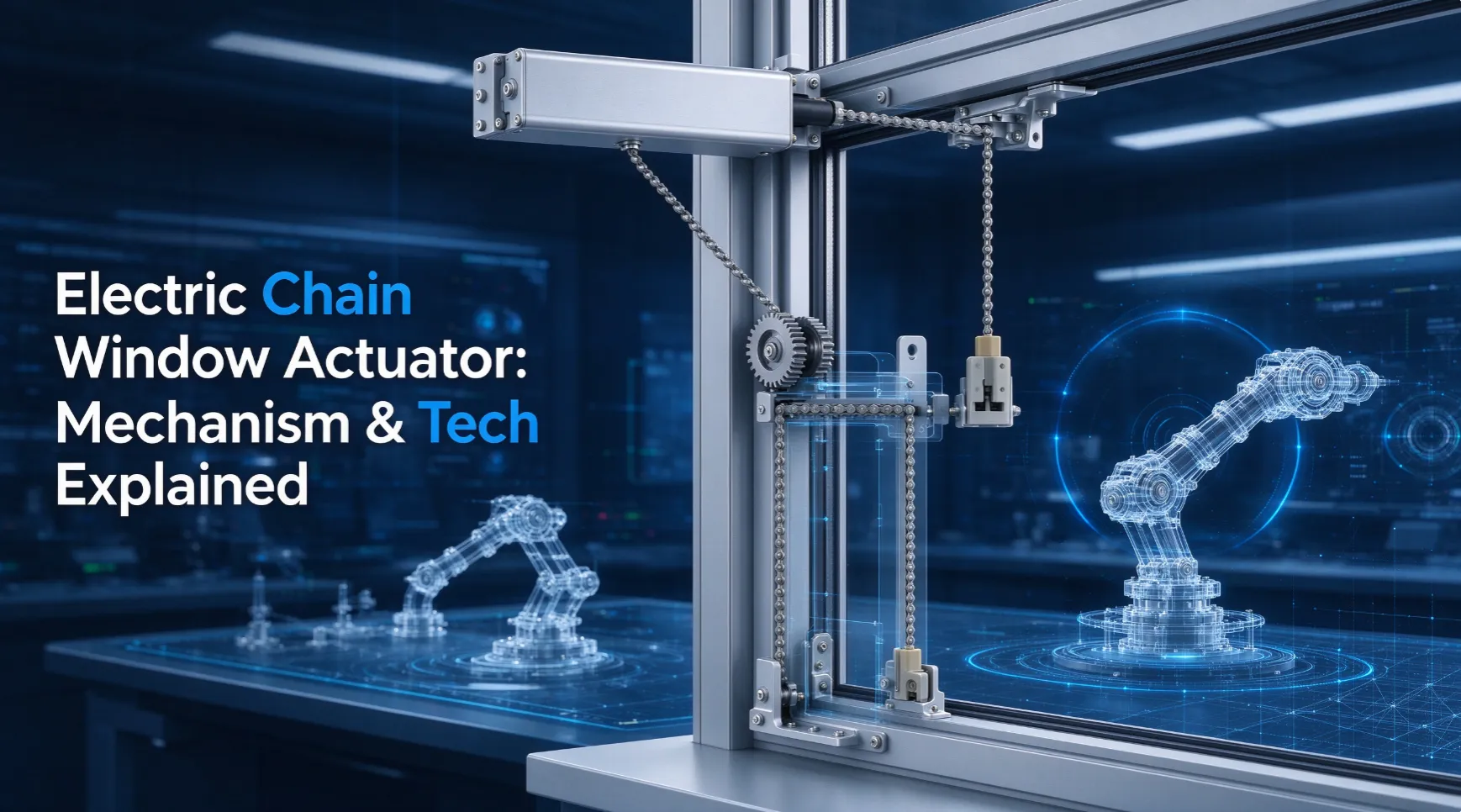
An electric chain window actuator serves as the technological backbone of modern automatic smoke vent systems. These devices convert electrical energy into precise mechanical motion. Building owners and facility managers rely on this technology to control natural ventilation and emergency smoke extraction.
Understanding how an electric chain window actuator works helps distributors and installers select the right system. The technology involves specialized gearing, articulated chains, and smart motor control. This article breaks down the internal mechanics and explains the automation process.
Technology Overview of Chain Actuators
An electric chain window actuator automates the movement of window sashes. Unlike manual systems, these devices respond instantly to environmental sensors or manual switches. The system integrates directly into the building management system (BMS).
The core technology relies on a compact design. Manufacturers conceal the entire mechanism within a sleek housing. This allows the actuator to operate heavy smoke vents without disrupting the architectural aesthetics of a commercial building.
Internal Driving Mechanism
The internal driving mechanism determines the pushing and pulling force of the actuator. A standard electric chain window actuator contains three primary components:
- Electric Motor: The primary power source, typically utilizing DC or AC power to generate rotational force.
- Reduction Gearbox: A series of gears that slow down the motor speed while multiplying its torque.
- Drive Sprocket: A toothed wheel that catches the chain links, converting the rotational torque into linear motion.
When the system receives a signal, the electric motor activates. The motor spins rapidly, and the reduction gearbox transfers this energy to the drive sprocket. The sprocket then feeds the chain out of the housing to push the window open.
Chain Movement Dynamics
The chain itself features a highly specialized engineering design. It must remain flexible enough to coil inside a small housing, yet rigid enough to push a heavy window sash.
Engineers solve this problem using a semi-rigid, articulated chain design. The links lock together tightly when extending outward. This creates a solid bar capable of transferring high thrust forces.
When the actuator retracts, the chain bends in a single direction. The drive sprocket pulls the links back into the casing, folding them neatly into a compact internal channel.
Window Opening and Closing Process
The automation workflow requires exact precision to prevent mechanical failure. Here is the step-by-step process of how the electric chain window actuator operates a smoke vent:
- Signal Reception: The control panel receives an open command from a smoke detector, thermostat, or manual switch.
- Motor Activation: The actuator powers up and the internal drive sprocket begins to rotate forward.
- Chain Extension: The drive sprocket pushes the articulated chain out of the housing, exerting linear force on the window bracket.
- Sash Movement: The rigid chain pushes the window sash outward until it reaches the pre-programmed stroke limit.
- Reversal and Retraction: Upon receiving a close signal, the motor reverses direction, pulling the sash closed and compressing the weather seals.
Motor Control Methods and Automation
Advanced control systems determine how the actuator behaves in different scenarios. Installers integrate these actuators with various control panels to meet specific building requirements.
Most systems utilize microprocessors to monitor the motor stroke length and detect obstacles. If the chain encounters unexpected resistance, the electronic load disconnect stops the motor to prevent damage.
Building designers must choose the correct voltage based on the specific application. Here is a comparison of common motor control configurations:
| Feature | 24V DC Actuators | 230V AC Actuators |
| Primary Application | Emergency smoke ventilation | Daily natural ventilation |
| Safety Integration | Connects to battery-backed panels | Operates on standard mains power |
| Speed Control | Highly precise and variable | Generally fixed speed |
| Wiring Distance | Requires thicker cables for long runs | Operates easily over long distances |
System Value and Compliance Standards
Selecting high-quality actuator technology directly impacts building safety and regulatory compliance. European standard EN 12101-2 classifies an opening smoke vent as a unique life-safety product.
Installers cannot simply attach any motor to a window frame. Facilities must test the vent profile and the actuator together as a complete system. This testing ensures the electric chain window actuator maintains its integrity during high heat.
By understanding the underlying technology, business owners can ensure their automated window systems meet legal requirements while providing reliable, long-term performance.
FAQ
- How does an electric chain window actuator push a heavy window?
The actuator uses a specially designed articulated chain that locks into a rigid straight line when extended. A reduction gearbox multiplies the motor torque, allowing this rigid chain to push heavy sashes outward without buckling. - What controls the stroke length of the chain?
Modern electric chain window actuators use electronic limit switches or microprocessors. Installers program these internal controls during setup to tell the motor exactly when to stop pushing or pulling. - Can these actuators connect to automatic weather sensors?
Yes. Facilities easily connect actuator control panels to rain and wind sensors. When sensors detect bad weather, the control panel automatically sends a close signal to the motor. - Why do smoke vent systems typically use 24V DC actuators?
Fire safety codes require smoke vents to operate during a power outage. 24V DC actuators connect directly to battery-backed control panels, ensuring the windows open even if the main building power fails. - Does adding an actuator make any window a compliant smoke vent?
No. European regulations like EN 12101-2 require manufacturers to test the window frame and the actuator together as a single functioning system. Installing an actuator on an untested window fails to meet compliance standards.
Reference Sources
- Vent Engineering: EN12101-2 is it a load of BS?
- SE Controls: Automatic Opening Vent (AOV) Window Compliance Requirements
Leave a Reply