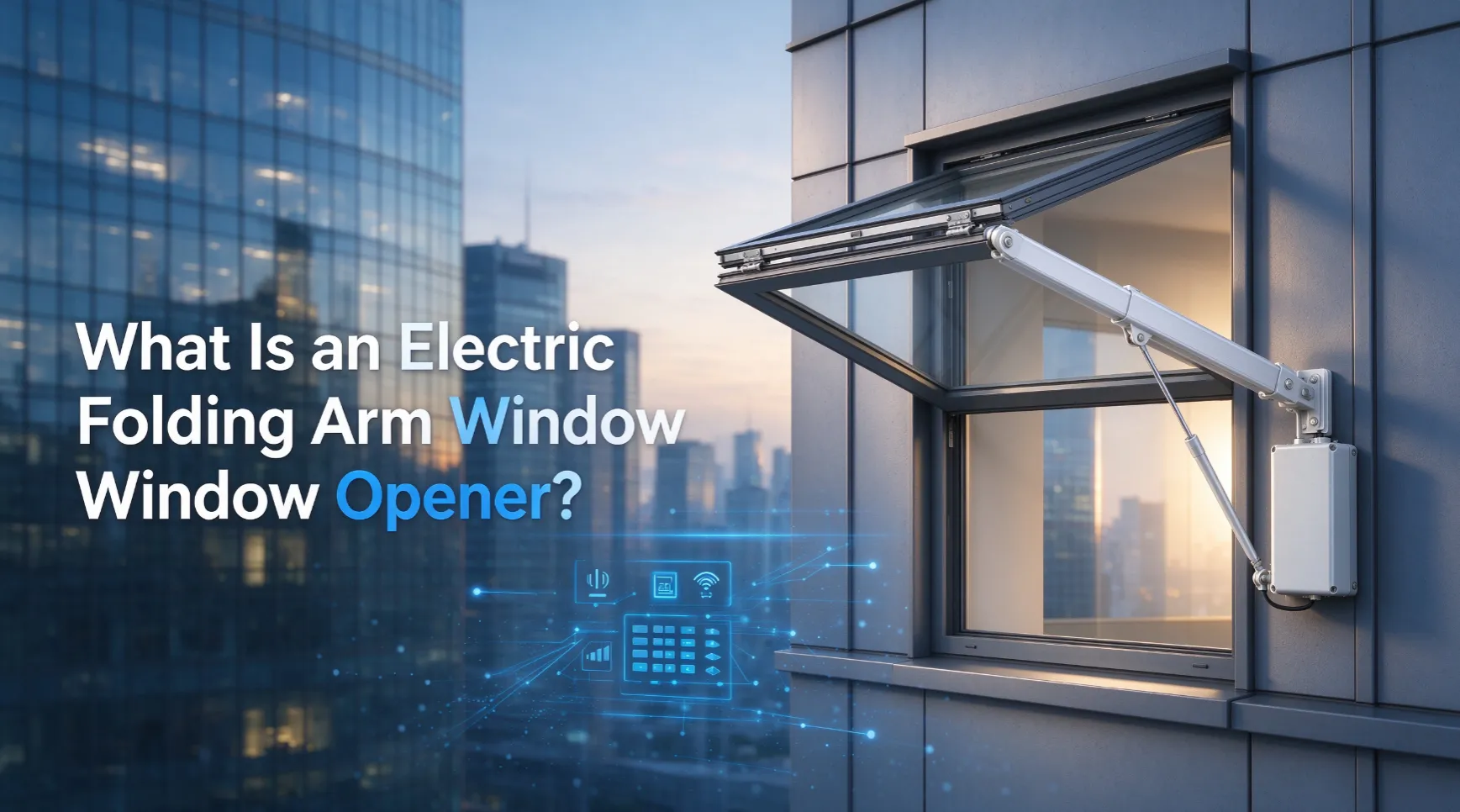
An electric folding arm window opener features a unique and robust design. The main components work together to deliver high-torque output. The core structure includes a drive motor, an articulated arm, and mounting brackets. Manufacturers build these systems to handle extreme weather conditions.
The electric motor sits inside a compact aluminum housing and generates the initial rotational force. The articulated arm consists of two hinged segments acting as the primary force transmission medium. Heavy-duty brackets secure the actuator to the window frame to ensure stability during movement.
How It Works: Force Transmission
The driving mechanism relies on mechanical leverage to operate heavy window sashes. The system converts rotational energy into a powerful pushing or pulling motion. This design guarantees smooth and consistent operation for automatic smoke vent windows.
Here is how the force transmission process works:
- Energy Activation: The control panel sends an electrical signal to the motor.
- Torque Generation: The motor spins and activates the internal gearbox to increase torque.
- Arm Extension: The main drive shaft rotates the primary segment of the folding arm.
- Force Transfer: The hinge pushes the secondary arm outward against the window sash.
- Sash Movement: The mechanical advantage forces the window open to the desired angle.
Core Benefits of the System
Professionals often must choose between different window opening mechanisms. The folding arm design offers specific advantages over other actuators. The installation position and window type largely dictate which product you should select to maximize these benefits.
The most significant benefit is the wide opening angle, which can reach up to 90 degrees. This provides maximum airflow for rapid smoke exhaust. Additionally, the heavy-duty mechanical structure handles high wind loads and large glass panel weights with ease.
Below is a comparison of common window actuators:
| Feature | Folding Arm Opener | Chain Actuator | Linear Actuator |
| Design | Two-part hinged arm | Flexible metal chain | Threaded spindle |
| Opening Angle | Very wide (up to 90°) | Limited (< 60°) | Moderate |
| Window Type | Side-hung, doors | Top-hung, bottom-hung | Skylights, domes |
| Force Output | High | Low to Medium | Very High |
| Visual Impact | Visible when open | Concealed profile | Highly visible |
This comparison highlights that folding arm models excel on large, side-hung facade windows requiring maximum clearance.
Key Applications
Architects specify these openers for specialized safety and ventilation requirements. You will typically install these actuators on automatic smoke vent windows to release toxic smoke rapidly and comply with standard smoke and heat venting regulations. They also provide the necessary leverage to swing large, heavy side-hung glass panels outward.
These openers adapt well to inward-opening windows where exterior opening proves impossible. Furthermore, building managers use them to automate heavy escape doors. This guarantees safe evacuation routes during fire alarms and integrates smoothly with building management systems.
Summary
The electric folding arm window opener provides an indispensable solution for modern building safety. Its unique articulated structure delivers unmatched opening angles and force. By understanding its mechanisms and benefits, professionals can select the right actuator for any architectural project.
FAQ
1. What is the maximum opening angle of a folding arm opener?
These actuators typically open windows up to 90 degrees. This wide angle provides maximum airflow and helps buildings meet stringent smoke ventilation requirements for essential venting systems.
2. Can I install this opener on a standard top-hung window?
You can, but professionals usually do not recommend it. Chain actuators offer a much better and more aesthetic solution for top-hung windows.
3. How does the device perform during a power outage?
The system relies on backup battery supplies during emergencies. The opener will continue to function seamlessly during electrical grid failures to ensure immediate smoke exhaust.
4. Does the folding arm require regular maintenance?
Yes, it requires periodic inspection. You must check the hinges and lubricate the articulated joints annually to prevent friction and ensure long-term operational reliability.
5. What materials make up the articulated arm?
Manufacturers typically use high-grade stainless steel or reinforced anodized aluminum. These materials resist corrosion and handle the high mechanical stress of daily operation.
Leave a Reply