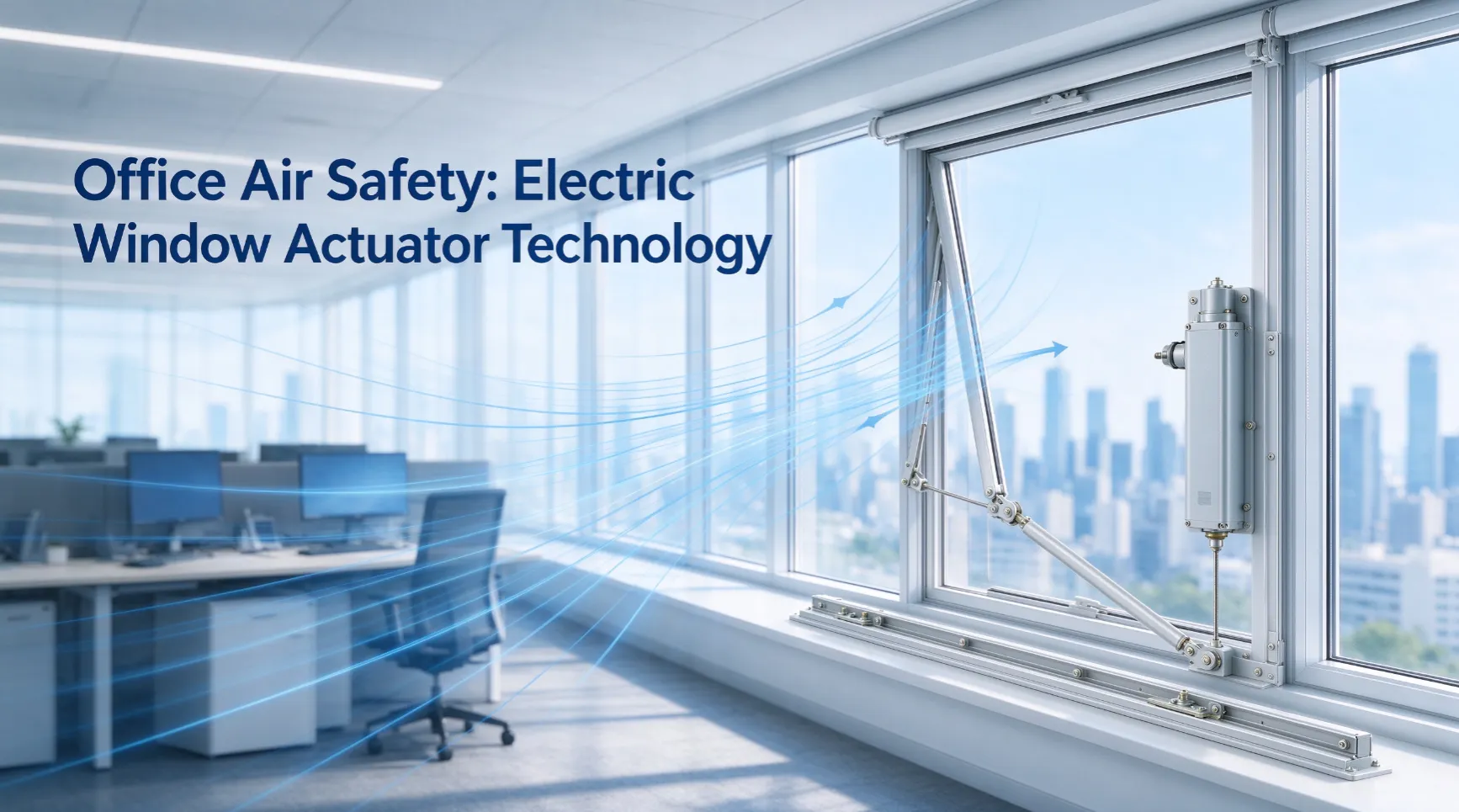
Modern commercial buildings demand strict environmental controls to protect occupants. Facility managers face growing challenges regarding indoor air quality and emergency protocols. A reliable electric window actuator provides a technical solution that balances daily comfort with critical life safety measures.
Hidden Safety Risks in Commercial Workspaces
Commercial offices harbor several environmental and physical hazards that compromise occupant health. Managers must address these vulnerabilities to maintain a productive workspace.
Indoor Air Quality Deficiencies
Indoor spaces often contain higher pollution levels than outdoor environments. The U.S. Environmental Protection Agency (EPA) states indoor pollutant levels can reach two to five times higher than outside air. Office equipment and carpets emit volatile organic compounds (VOCs). Without proper ventilation, these pollutants accumulate quickly and trigger respiratory issues.
Fire and Smoke Hazards
During a fire emergency, toxic smoke presents a greater threat than flames. Sealed commercial buildings trap smoke rapidly, reducing visibility and blocking escape routes. If facility managers rely on manual windows, they cannot ensure rapid smoke extraction during a crisis.
Manual Operation Dangers
Staff members face physical risks when trying to operate heavy or hard-to-reach commercial windows. Climbing on desks to reach manual latches creates unnecessary fall hazards. An automated system removes the need for this physical interaction.
Technology Overview: The Electric Window Actuator
An electric window actuator serves as an electromechanical device that opens and closes windows automatically. The system replaces manual handles with motorized precision. Manufacturers design these units to integrate seamlessly into modern commercial window profiles.
When a facility requires heavy-duty operation, engineers specify an electric window opener actuator. These devices typically utilize a rigid chain or a linear spindle mechanism. The internal motor drives the mechanism outward to push the window sash open and reverses the motion to pull it tightly shut.
How The Automation System Works
Building a responsive environment requires synchronized technology. A modern ventilation system follows a specific operational sequence to ensure safety and convenience.
Step-by-step Process:
- Environmental Monitoring: Networked sensors constantly measure room temperature, carbon dioxide levels, and detect potential smoke particles.
- Data Processing: A central control panel receives the sensor data and evaluates it against programmed safety thresholds.
- Actuator Execution: The control unit sends a signal to the electric window actuator, which precisely opens the vent to the required angle.
- Emergency Override: If detectors identify smoke, the system bypasses comfort settings and fully opens the windows to exhaust toxic fumes.
Key Features Enhancing Safety and Convenience
Window automation technology provides specific advantages for commercial office environments. The hardware incorporates intelligent features that protect both the building and its occupants.
- Obstacle Detection: Advanced motors sense physical resistance during the closing cycle. The mechanism stops instantly if it detects a hand or object, preventing serious injuries.
- Weather Protection: Rain and wind sensors communicate directly with the control panel. The system automatically closes windows during sudden storms to prevent internal water damage.
- Zoned Control: Facility managers can divide an office into independent ventilation zones. The system opens windows on the shaded side while keeping sun-exposed windows tightly closed.
Business Impact for Office Facilities
Investing in automated ventilation technology delivers measurable business value. Improved indoor air quality directly boosts employee productivity and reduces sick leave. Fresh air circulation keeps the workforce alert and focused throughout the day.
Furthermore, natural ventilation reduces reliance on mechanical air conditioning. Companies lower their energy consumption and decrease utility costs. Meeting strict European standards like EN 12101-2 for smoke control also protects the company from compliance penalties and liability.
FAQ
- What does an electric window actuator do in an office?
It automates the opening and closing of windows to regulate fresh air and exhaust harmful smoke. The device replaces manual operation with motorized control. - How does an electric window opener actuator improve fire safety?
During a fire alarm, the actuator receives an emergency signal and opens the window to its maximum capacity. This action vents toxic smoke and clears escape routes. - Can these actuators connect to existing building management systems?
Yes, modern actuators integrate easily with standard Building Management Systems (BMS). Facility managers can control the entire building’s ventilation from a single interface. - Do automated windows save energy in commercial buildings?
They reduce energy consumption by utilizing natural cooling. The system opens windows to let in cool breezes, which lowers the demand on mechanical HVAC systems. - What happens to the actuator during a power outage?
Fire safety systems include battery backup units within the control panels. The actuator will still operate during an emergency even if the main building power fails.
Reference Sources
[1] US EPA – Do You Suspect Your Office Has an Indoor Air Problem?
[2] EN 12101-2:2003 Smoke Control Standard Guidelines
[3] UK Fire Safety Legislation
Leave a Reply