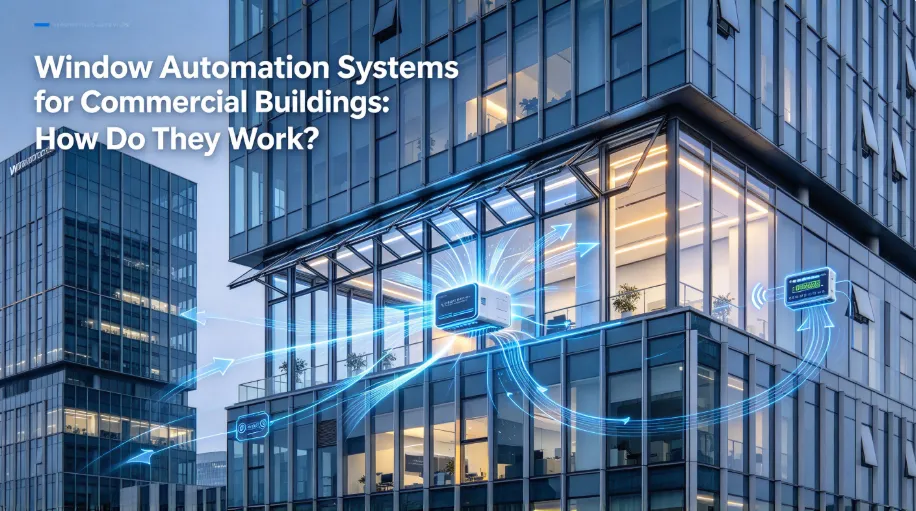
Modern architecture demands more than just aesthetic appeal. Building developers must integrate intelligent safety and environmental controls. A window automation system transforms standard architectural features into active safety tools. Automatic smoke vent windows regulate daily airflow and respond instantly during emergencies.
Technology Overview
A smart window automation system relies on a network of sensors, control panels, and electric actuators. These components eliminate the need for manual window operation. Facility managers deploy these systems to automate hard-to-reach rooflights, skylights, and commercial facade windows.
By connecting directly to a Building Management System (BMS), these electro-mechanical setups manage indoor air quality and fire safety simultaneously. The technology balances daily climate comfort with strict emergency compliance protocols.
How The System Works
We can break down the operational workflow into a simple step-by-step process. The system seamlessly shifts between daily ventilation and emergency response modes to protect building occupants.
- Environmental Monitoring: IoT sensors continuously track indoor temperature, humidity, and CO2 levels.
- Data Processing: The central control unit analyzes sensor data against pre-programmed comfort parameters.
- Actuator Execution: The control panel commands electric chain actuators to extend, opening the vents.
- Emergency Override: If smoke detectors trigger an alarm, the system instantly overrides normal settings.
- Smoke Extraction: The actuators open designated automatic smoke vent windows to their maximum capacity.
Key Features
Electric window actuators offer several advanced features that make them indispensable for modern commercial buildings and industrial facilities.
- Zoned Control Automation: You can program different areas of a commercial building independently. A sun-facing atrium can ventilate heat while shaded offices remain closed.
- Weather Protection Integration: External wind and rain sensors protect the interior. The system automatically closes windows before severe weather causes water damage.
- Battery Backup Power: Smoke ventilation setups include backup batteries. Vents will still open safely during a fire even if the main building loses power.
- IoT Connectivity: Modern actuators sync with cloud platforms. Building operators can monitor real-time air quality data and adjust settings via mobile applications.
Business Impact
Entrepreneurs, distributors, and building operators see significant returns on investment from smart ventilation technology. Automated daily ventilation flushes out stale air, creating a healthier environment that boosts worker productivity.
Furthermore, you reduce energy costs by flushing out hot air naturally instead of relying heavily on mechanical HVAC systems. This sustainable approach aligns with modern green building standards and lowers daily operational expenses.
From a risk management perspective, automatic smoke vent windows prevent disastrous property damage and save lives. They keep critical evacuation routes clear of toxic smoke, helping you comply with strict local fire codes.
Future Development
The integration of Artificial Intelligence will shape the future of commercial building ventilation. We expect upcoming systems to utilize predictive weather modeling and machine learning algorithms to optimize indoor climates.
The software will proactively open or close windows based on incoming weather fronts rather than reacting after a temperature change occurs. Wireless energy-harvesting sensors will also make retrofitting older buildings faster.
FAQ
- How does a window automation system improve building safety?
It integrates with fire alarms to automatically open designated smoke vent windows. This action extracts toxic smoke and keeps escape routes clear during emergencies. - Can I connect electric window actuators to my existing fire alarm?
Yes. You can wire modern control panels directly into standard commercial fire alarm systems for instant emergency response. - Do automatic smoke vent windows work during a power outage?
Yes. These systems utilize battery backups inside the main control panel to guarantee safe operation during electrical failures. - What components make up a standard automated window setup?
The core setup includes environmental sensors, a central control panel, power supplies, and motorized electric actuators attached to the frames. - Does window automation help reduce business energy costs?
Yes. The technology utilizes natural airflow to cool the building, which drastically reduces your dependence on expensive mechanical air conditioning.
Leave a Reply