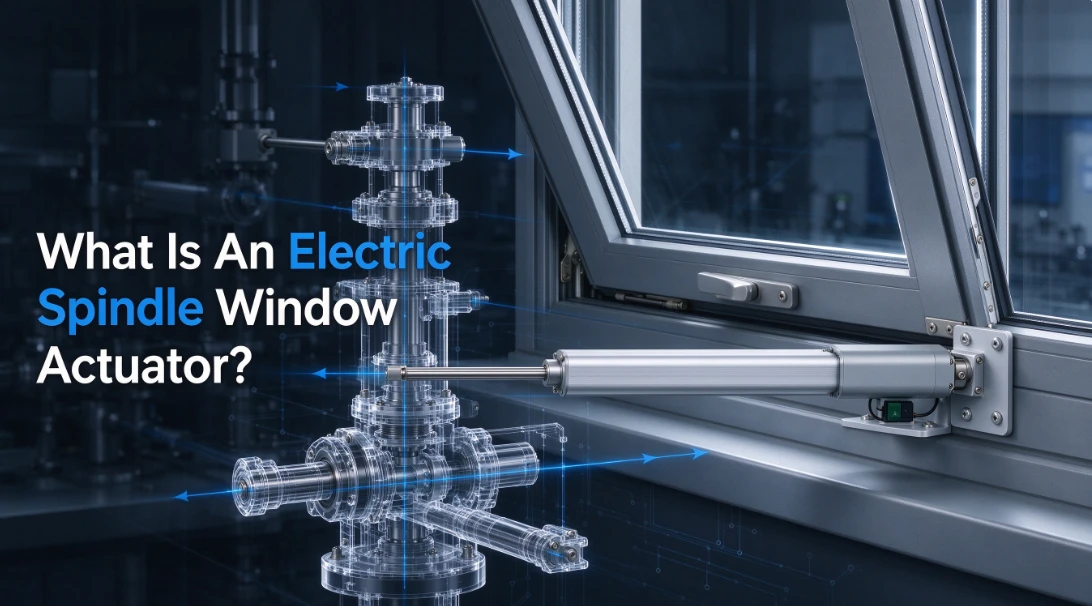
Modern commercial buildings rely heavily on automated systems to maintain safety and indoor air quality. One crucial component in this setup is the electric spindle window actuator. These devices provide the mechanical strength needed for automated smoke vent windows, ensuring they open reliably during daily operations or emergency situations.
But what exactly makes this mechanism so effective? An electric spindle window actuator is a specialized motor designed to open and close heavy windows, skylights, and roof domes. Unlike chain actuators that use a flexible chain, a spindle actuator uses a threaded rod mechanism to push the window open.
This design provides exceptional stability and lifting power, making it a standard choice for heavy skylight systems and large industrial smoke vents.
Main Components of a Spindle Actuator
To understand how these actuators perform so reliably, you need to look inside the casing. The design is straightforward but highly efficient. The primary parts work together to create a durable automation solution.
Here are the core components:
- Electric Motor: The power source, typically available in 24V or 230V options, which generates the initial rotational movement.
- Threaded Spindle: A precision-engineered metal screw that runs along the length of the internal mechanism.
- Push Rod: A rigid metal tube that extends and retracts as the spindle turns. The rigid rod connects directly to the window frame, ensuring stable and controlled linear movement.
- Housing: A robust, weather-resistant casing that protects the internal mechanics from dust, moisture, and industrial debris.
The Linear Drive Principle Explained
Electric spindle window actuators operate on the linear drive principle. The process starts when the automated control panel sends an electrical signal to the motor. The motor spins, turning the internal threaded spindle.
As the spindle rotates, a specialized nut attached to the push rod travels along the threads. This action converts the rotational movement of the motor into a straight, linear push-or-pull motion. Because the rod remains rigid, the linear drive delivers a consistent, powerful force that easily pushes heavy windows outward.
When selecting a window actuator, professionals evaluate two critical specifications: stroke and thrust.
- Stroke Length: This refers to the maximum distance the push rod extends from the housing. The stroke determines how wide the window will open. Typical stroke lengths for industrial ventilation range from 200mm to over 800mm, depending on the required airflow.
- Thrust Force: Thrust measures the actuator’s pushing and pulling power, usually expressed in Newtons (N). Spindle actuators deliver high thrust force, often ranging from 450N to over 1000N. This massive load capacity allows them to lift heavy glass roof domes against gravity and resist strong wind loads.
Key Benefits of Spindle Technology
Building operators and architects choose spindle actuators for their rugged performance. The rigid structure offers several distinct advantages over other automation methods.
- High Load Capacity: The screw-driven mechanism handles immense weight, easily managing oversized architectural glass and heavy metal louvers.
- Weather Resistance: The rigid rod holds the window firmly in place, preventing wind flutter and maintaining stability during severe weather.
- Precise Control: The linear drive allows exact positioning. You can stop the window at any point along its stroke for optimal natural ventilation.
- Durability: Fewer exposed moving parts mean less wear and tear, reducing maintenance costs for facility managers over time.
Common Applications in Building Automation
Spindle actuators excel in environments where chain actuators might struggle. They handle heavy loads and operate reliably in harsh conditions. Facility managers install them across various industrial and commercial scenarios.
- Skylights and Roof Domes
Roof windows face the direct force of gravity. A spindle actuator pushes straight up, providing the necessary lifting power to open heavy skylights safely. When closed, the rigid mechanism firmly locks the roof dome, preventing water leaks and drafts.
- High-Level Façade Windows
Many commercial buildings feature high-level awning or hopper windows for natural ventilation. These hard-to-reach windows require reliable automated solutions. Spindle actuators offer the perfect balance of power and longevity, easily integrating with the central building management system.
- Industrial Ventilation Windows
Factories and warehouses demand robust smoke ventilation systems to protect workers and inventory. Spindle actuators drive large industrial louvers and heavy warehouse ventilation openings. They ensure rapid opening during fire emergencies, meeting strict commercial fire safety regulations.
Summary
An electric spindle window actuator transforms rotational motor power into a strong linear pushing force. Its rigid design, high thrust capacity, and precise stroke control make it indispensable for heavy-duty building automation. By integrating these actuators, building owners ensure reliable daily comfort ventilation and critical emergency smoke extraction.
FAQ
- What is the difference between a chain actuator and a spindle actuator?
A chain actuator uses a flexible chain that retracts into the housing, making it ideal for lighter façade windows. A spindle actuator uses a rigid rod driven by a threaded screw, offering much higher thrust for heavy skylights and industrial vents. - Can I connect a spindle window actuator to a fire alarm system?
Yes. You can wire 24V electric spindle actuators directly to automated smoke control panels. When the fire alarm triggers, the control panel automatically commands the actuators to open the smoke vent windows to extract toxic fumes. - How do I choose the right stroke length for my window?
The required stroke length depends on your window size and the desired opening angle. You must ensure the stroke provides enough ventilation area to meet local building codes without pushing the window hinges past their physical limits. - What does the thrust rating mean for window automation?
The thrust rating, measured in Newtons (N), indicates how much weight the actuator can push or pull. You must calculate the weight of your window and account for environmental factors like wind or snow load to select an actuator with sufficient thrust. - Are spindle actuators suitable for outdoor roof environments?
Yes. Manufacturers design most commercial spindle actuators with high IP (Ingress Protection) ratings. Their sealed metal housings protect the internal linear drive components from rain, dust, and harsh industrial environments.
Leave a Reply