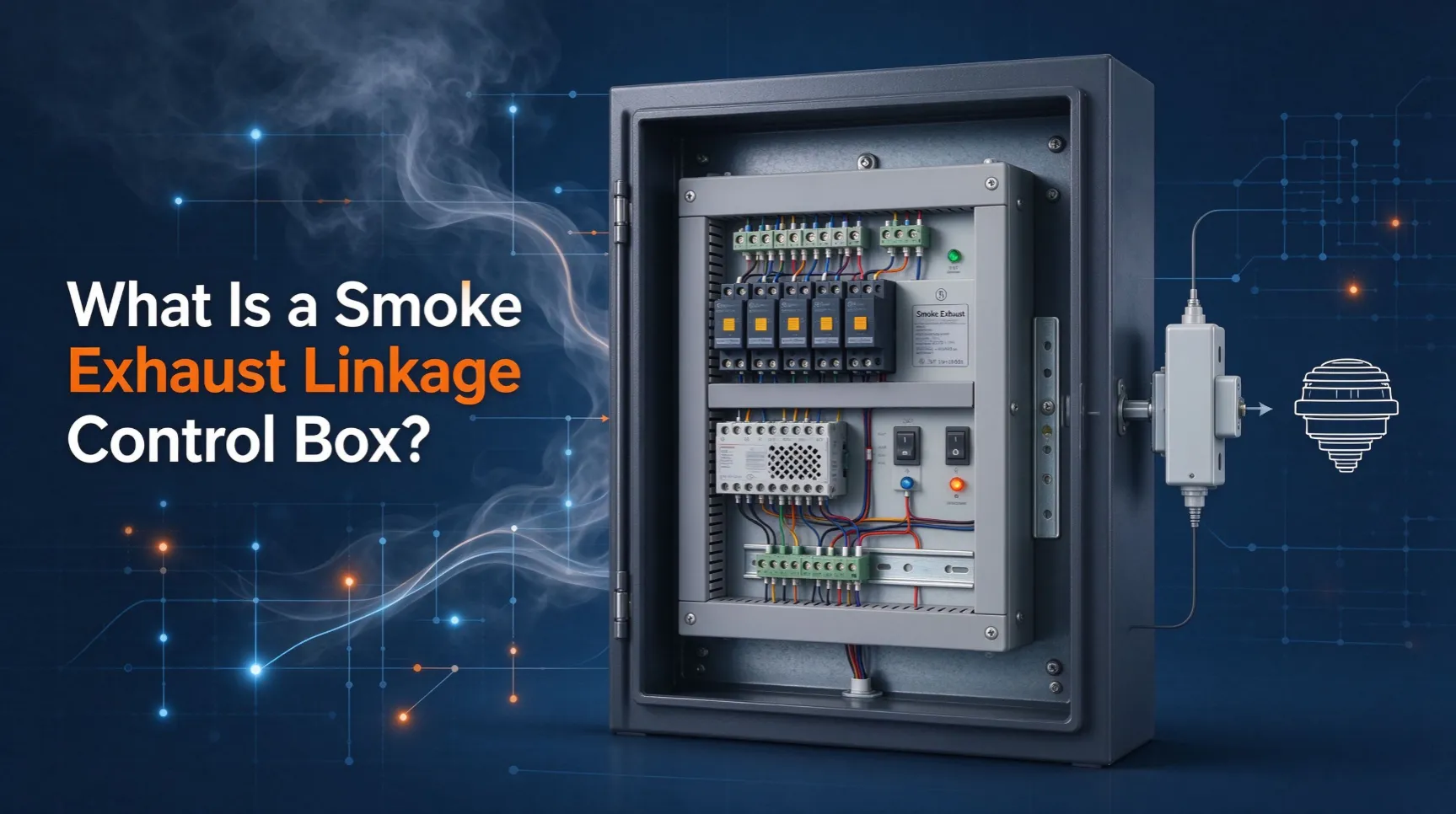
A smoke exhaust linkage control box serves as the central command unit for Automatic Opening Vent (AOV) systems. It connects building fire alarm panels with electric window actuators. When a fire occurs, this panel receives emergency signals and automatically triggers the windows to open. This rapid response extracts toxic smoke and protects escape routes.
The Role in Building Smoke Exhaust Systems
The control box acts as the critical bridge between detection and mechanical action. Without it, motorized windows cannot respond to fire threats automatically. The panel ensures reliable power delivery, usually via a backup battery system. This guarantees that smoke vents operate flawlessly even during a main power failure.
Core Functions and Control Logic
The core logic of a smoke exhaust linkage control box prioritizes life safety. It operates on a simple but strict sequence:
- Signal Reception: The panel receives an emergency trigger from the fire alarm or local smoke detectors.
- Priority Override: The system overrides any daily ventilation commands immediately.
- Power Distribution: It sends 24V DC power to the connected window actuators.
- Mechanical Action: The actuators drive the windows to their maximum open position to extract smoke.
Input and Output Interfaces
A professional AOV control panel features multiple inputs and outputs to integrate with the wider building management system.
Input Interfaces:
The box accepts signals from central fire alarm systems, localized smoke detectors, and manual firefighter override switches. Some advanced models also feature inputs for rain and wind sensors.
Output Interfaces:
The primary output delivers 24V DC power to the window actuators. Additionally, the panel provides volt-free contacts. These contacts send status updates back to the central building management system (BMS), indicating whether the windows are open, closed, or experiencing a fault.
Actuator Connection Methods:
Installers typically wire electric chain or spindle actuators to the control box using parallel connections. For large commercial buildings, panels can manage multiple zones. This zoning capability allows the system to open windows only on the floor experiencing the fire. Zone control prevents unnecessary oxygen supply to unaffected areas.
Fire Smoke Exhaust vs. Daily Ventilation Control
Many modern buildings use the same automated windows for both fresh air and emergency smoke exhaust. However, the control requirements differ significantly. The smoke exhaust linkage control box must differentiate between these two functions.
| Feature | Daily Ventilation Control | Fire Smoke Exhaust Control |
| Primary Purpose | Improve indoor air quality | Remove toxic smoke and heat |
| Trigger Source | Thermostats, CO2 sensors, manual switches | Fire alarms, smoke detectors, emergency call points |
| Window Opening Angle | Partially open for comfort | Maximum open position for rapid exhaust |
| System Priority | Low priority | Absolute highest priority (overrides all other commands) |
| Power Requirement | Main building power | Requires backup battery system |
Summary
A high-quality smoke exhaust linkage control box guarantees that a building’s fire safety strategy works when it matters most. It seamlessly integrates detection systems with mechanical actuators. Building owners must select certified panels to ensure compliance with strict fire safety regulations and protect human lives.
FAQ
- Can a smoke exhaust linkage control box operate during a power outage?
Yes. Certified control panels include built-in backup batteries. These batteries power the window actuators and maintain system readiness during main power failures. - How many window actuators can one control panel manage?
The capacity depends on the panel’s amperage rating. You must calculate the total current draw of all connected actuators and ensure it does not exceed the control box’s maximum output. - Can I use the smoke exhaust panel for daily ventilation?
Yes. Many advanced control boxes support daily ventilation inputs. However, the panel will instantly override any daily ventilation commands the moment it receives a fire signal. - What maintenance does a smoke exhaust control box require?
Facility managers must test the system regularly. Routine maintenance includes checking battery health, verifying communication with the fire alarm, and ensuring actuators open the windows fully. - Why do control panels use 24V DC power?
A 24V DC system provides safe, reliable power that easily integrates with backup batteries. It ensures stable performance for emergency life-safety equipment without relying on high-voltage mains.
Reference Sources
- Inbuild UK. (2026). AOV Control Panels: What They Do and What to Check.
- FireResist. (2026). AOV Ventilation Guide – Smoke Vent Design, Rules, Testing.
- LEROND Tech. (2026). Smoke Ventilation Window Actuators for Fire Safety Systems.
- Sonha Auto. (2026). Comparing ventilation windows and smoke exhaust windows.
- WindowMaster. (2025). Smoke vents | Safety and ventilation for existing windows.
Leave a Reply