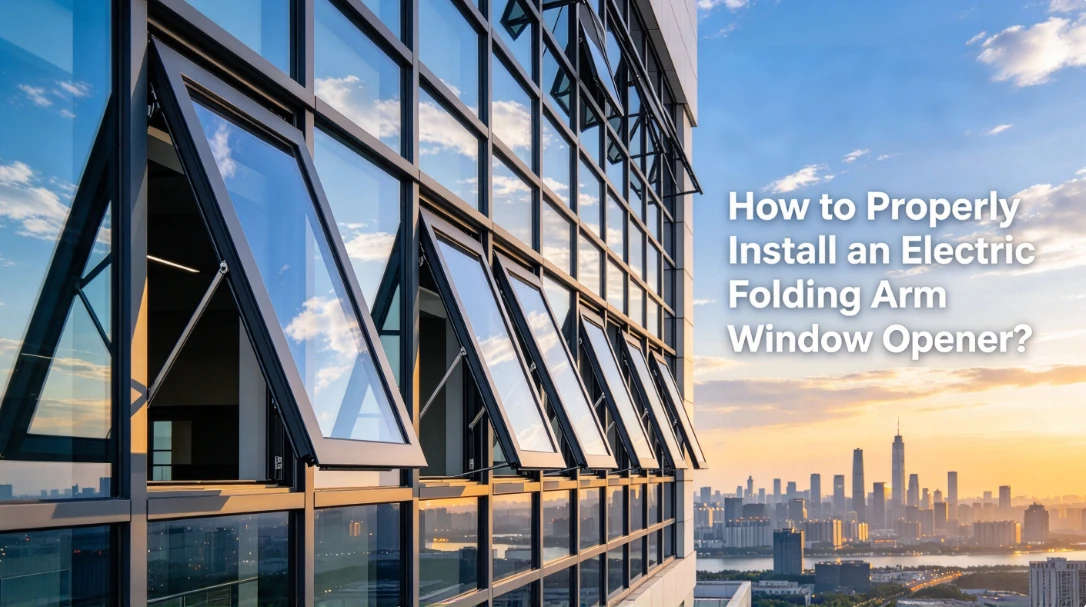
Proper ventilation and smoke extraction systems play a critical role in commercial building safety. Facility managers and business owners rely on automatic smoke vent windows to meet strict safety regulations. Preparing properly before installing an electric chain window actuator ensures system longevity and flawless operation.
Failing to verify dimensions or materials beforehand often leads to expensive rework. You must evaluate the physical environment and window structure before drilling any holes. This guide breaks down the essential pre-installation checks every professional must perform.
Crucial Pre-Installation Checklist
You need to inspect multiple structural and mechanical factors before setting up your folding arm or chain systems.
1. Verifying Sash Movement Trajectory
Window sashes move in specific arcs depending on their hinge placement. You must map the exact opening and closing trajectory of the window sash. Ensure the actuator operates in perfect alignment with this path.
Any misalignment forces the chain or folding arm to bend at awkward angles. This unnatural stress wears down the motor gears rapidly. Always manually push the window through its full range of motion to identify potential binding points.
2. Determining Bracket Position
Brackets serve as the foundation for the entire opening mechanism. You must position the mounting brackets exactly where the manufacturer specifies. The pivot point of the actuator needs to align parallel to the window hinges.
Incorrect bracket placement alters the leverage point. This forces the motor to push harder than its rated capacity. Use a laser level and measuring tape to mark the exact screw holes before you begin drilling.
3. Assessing Fixing Base Material
Windows feature various frame materials, including aluminum, PVC, wood, and steel. You need to identify the base material to select the correct fasteners. Standard screws easily pull out of thin PVC or soft wood during heavy wind loads.
If you discover a weak or hollow frame, install reinforced metal plates to distribute the load. The fixing base must withstand the maximum push and pull force generated by the electric chain window actuator.
4. Planning Cable Routing Path
Automatic smoke vent windows require reliable power and control signals. You should plan a clean and protected path for all wiring. Exposed cables look unprofessional and present a serious safety hazard if they snag on moving parts.
Check the power requirements for your specific building automation system. Leave enough cable slack near the hinges to accommodate the full opening angle of the window.
5. Measuring Installation Space
The motor housing requires a specific amount of clearance against the window frame. You must measure the mounting surface depth and width to guarantee a proper fit. Ensure the chain or folding arm retracts completely without hitting the glass.
Tight corners often restrict the actuator body, forcing installers to use specialized spacer blocks. Confirm you have adequate room for both the device and the necessary maintenance tools.
Common Installation Problems to Avoid
Skipping preparation steps causes frustrating mechanical failures. You can avoid these common traps by reviewing the following list:
- Improper Installation Position: Placing the motor too close to the hinge dramatically reduces mechanical leverage. The motor struggles to push the window, triggering the overload protection.
- Obstructed Linkages: Debris, tight seals, or structural elements blocking the chain path will stall the motor. Clear the entire movement zone before testing.
- Unsecured Brackets: Using weak screws causes the brackets to loosen over time. A loose bracket eventually tears away from the frame, dropping the heavy sash.
Why You Must Follow the Product Manual
Every brand and model features unique engineering requirements. While these general principles apply to most setups, your specific product manual serves as the ultimate authority.
Manufacturers dictate exact millimeter dimensions for bracket placement and stroke limits. You must follow the precise wiring diagrams and torque specifications provided in the box. Never guess the measurements or substitute parts without consulting the official technical documentation.
Compliance with Safety Standards
When installing actuators for smoke and heat exhaust ventilation, systems must comply with local fire regulations. Proper testing ensures the actuators perform under the demanding conditions of a fire. Incorrect installation nullifies safety certifications and exposes building owners to legal liabilities.
FAQ
- What is an electric chain window actuator?
An electric chain window actuator uses a motorized chain mechanism to open and close hard-to-reach windows. Commercial buildings use them heavily for natural ventilation and automated smoke extraction systems. - How do I determine the correct installation space?
You must measure the depth, width, and height of your window frame. Compare these measurements against the dimensions listed in your product manual to ensure the housing and brackets fit securely. - Why is bracket positioning so important?
Correct bracket positioning ensures the motor pushes and pulls the sash at the optimal angle. Improper placement creates mechanical stress, damages the chain, and instantly voids the manufacturer warranty. - What fasteners should I use for aluminum frames?
You should use specialized self-tapping screws or rivet nuts designed for aluminum profiles. Always ensure the fasteners penetrate deeply enough to handle the actuator’s maximum force rating. - Why does the actuator motor stop halfway during testing?
The motor usually stops because it detects physical resistance or an obstructed linkage. Check the sash movement trajectory for friction and verify that the window hinges operate smoothly.
Leave a Reply