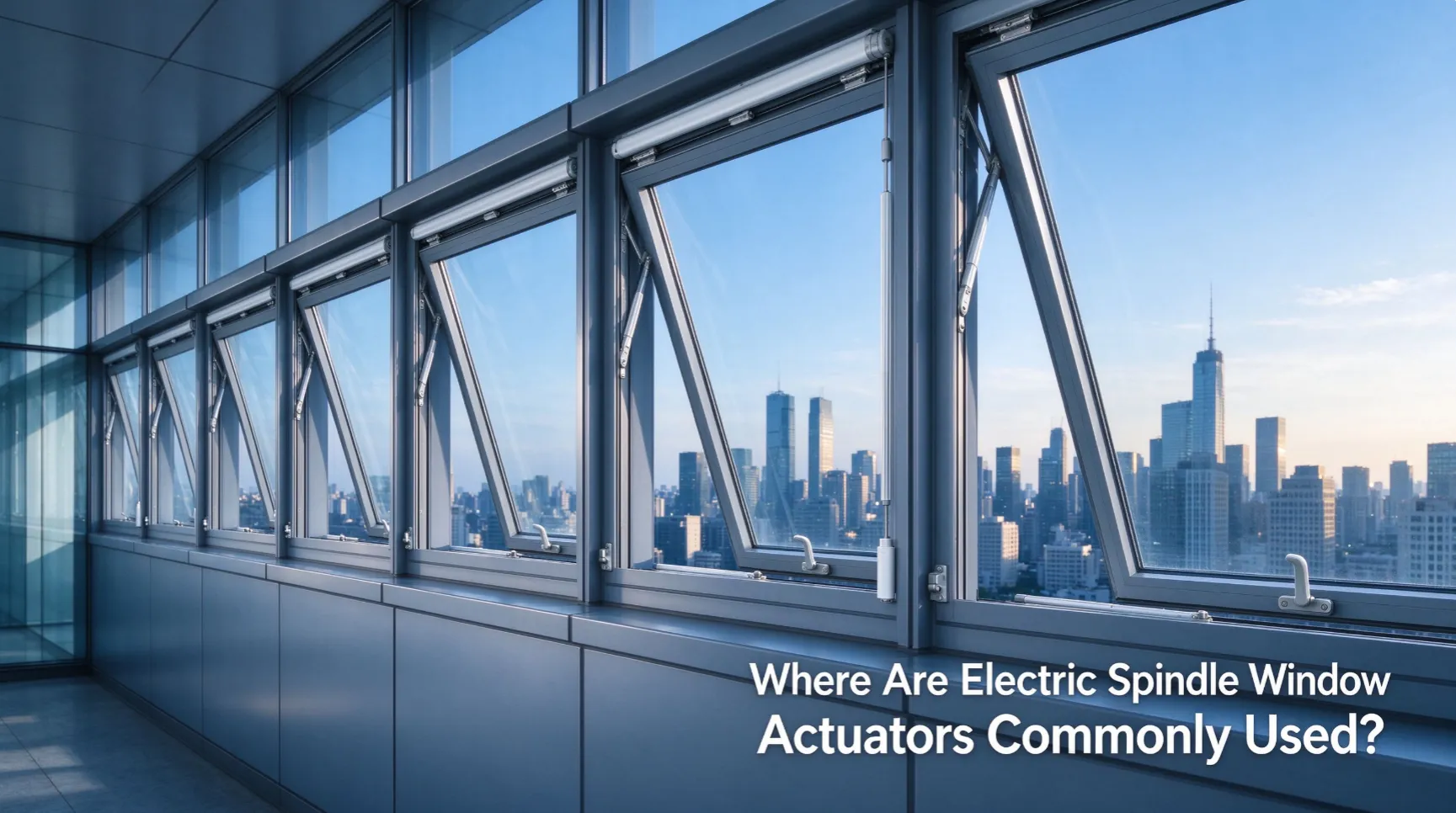
Proper ventilation ensures safety and comfort in large industrial facilities. Managing heavy roof vents requires robust mechanical solutions. An electric spindle window actuator delivers the reliable linear drive necessary for these demanding environments. Facility managers rely on this technology for automated climate control and smoke extraction.
How It Works in Ventilation Systems
The internal motor spins a nut along a fixed threaded rod. As the motor turns, the rod extends or retracts to push the window open or pull it closed. This straight-line force application ensures a highly stable and rigid hold. The structural rigidity prevents high winds from accidentally blowing the window shut.
Key Performance Metrics for Different Projects
Selecting the right hardware depends on specific project demands. Engineers must evaluate several mechanical factors before installation. Analyzing these metrics ensures the system functions reliably during both daily use and emergency situations.
Operating Frequency
Natural ventilation systems open and close multiple times daily to regulate indoor temperatures. Conversely, smoke vents might only operate during emergencies or routine testing. High-frequency daily applications require motors with superior heat dissipation and durable internal gearing.
Window Size
Massive industrial skylights demand substantial structural support. Installers must match the actuator’s physical dimensions and load capacity to the window frame. Extra-wide sashes often require a synchronized dual-actuator setup to prevent the frame from twisting during operation.
Required Stroke
The stroke measurement dictates exactly how far the window opens. Smoke extraction systems typically require longer strokes to meet strict fire safety regulations. Engineers calculate the necessary stroke based on the required aerodynamic free area for effective smoke clearance.
Thrust Requirements
Thrust represents the total pushing force the motor generates. Heavy roof windows fighting gravity, wind, or snow loads need immense high-thrust capabilities. A standard electric spindle window actuator often delivers between 400N and 1000N of force.
Application and Project Focus Comparison
Different installation scenarios require different performance priorities. Review the table below to understand how project requirements shape actuator selection.
| Application Scenario | Primary Project Focus | Key Performance Metric |
| Industrial Skylights | Lifting heavy glass panels against gravity | Maximum Thrust Force |
| Roof Ventilation Windows | Weather resistance and stable climate control | Operating Frequency |
| High-Level Windows | Synchronized opening of wide transoms | Window Size Compatibility |
| Smoke Exhaust (AOV) | Rapid opening for maximum air clearance | Required Stroke Length |
Common Industrial Applications
Factories utilize industrial skylights to provide natural light and exhaust hot air. Spindle actuators easily lift these heavy glass panels against direct gravitational pull. Warehouses depend on roof ventilation windows to regulate internal humidity. The linear drives offer stable operation even under harsh weather conditions.
Commercial buildings feature hard-to-reach transom windows near the ceiling. Automated actuators eliminate the need for dangerous manual operation at dangerous heights.
Summary
Investing in the correct ventilation hardware ensures long-term operational efficiency. Evaluate your window size, thrust needs, and environmental conditions carefully before making a purchase. A properly specified electric spindle window actuator improves daily comfort and guarantees emergency safety compliance.
FAQ
- What is an electric spindle window actuator?
It is a motorized linear drive device that opens and closes heavy windows. The internal motor turns a threaded rod to provide strong, stable pushing and pulling force. - Where do engineers use spindle actuators most often?
Builders install them primarily on heavy roof vents, industrial skylights, and high-level windows. They excel in commercial scenarios requiring significant lifting capacity and weather resistance. - How much thrust does a typical spindle actuator provide?
Most standard models offer between 400N and 1000N of thrust. Manufacturers also produce high-capacity versions that deliver even greater force for heavy-duty industrial applications. - Can these actuators connect to automated fire systems?
Yes. Installers frequently integrate them with smoke detectors and fire control panels. They serve as a crucial component of automated smoke ventilation (AOV) systems. - How do I choose the right stroke length?
You must calculate the required opening angle and the aerodynamic free area. Local fire safety regulations often dictate specific minimum opening distances for proper smoke extraction.
Leave a Reply