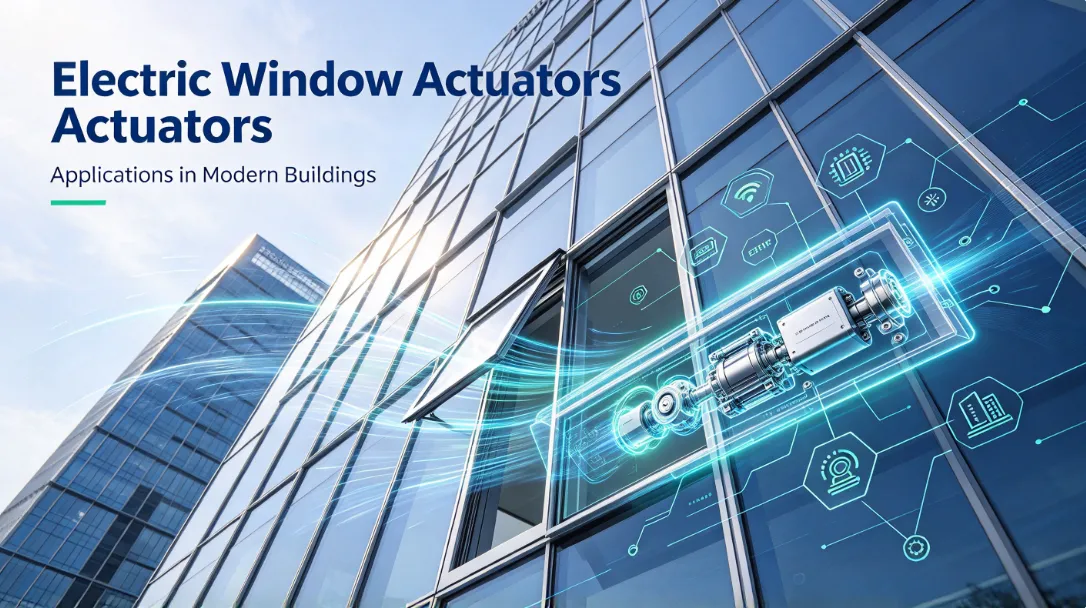
Modern architecture demands intelligent solutions for safety and environmental control. Facility managers face growing pressure to maintain air quality and meet strict fire safety regulations. Automatic smoke vent windows provide a reliable answer. At the core of these systems lie electric window actuators. These devices transform manual windows into smart, automated assets.
What Are Electric Window Actuators?
Electric window actuators are electro-mechanical devices that replace traditional manual window handles. They utilize an integrated motor to automatically push or pull a window open and closed. Building contractors typically install these mechanisms on out-of-reach rooflights, heavy skylights, and expansive commercial facade windows.
Facility owners install these actuators to enable natural ventilation and automatic smoke extraction. When connected to a central control panel, the actuators respond instantly to environmental sensors or emergency triggers. This technology eliminates the need for manual operation. It ensures buildings breathe efficiently and remain safe during unexpected emergencies.
How Window Automation Systems Work
Understanding the mechanics helps building operators choose the right equipment. The system typically consists of the actuator unit, a power supply, and a control panel. Most commercial applications use electric chain actuators or linear actuators. A motorized chain or metal spindle extends to open the window sash and retracts to close it securely against the frame.
During daily operations, environmental sensors monitor temperature and carbon dioxide levels. When indoor air quality drops, the control panel commands the electric window actuators to open the vents. In emergency scenarios, smoke detectors override the standard ventilation settings. The system instantly opens designated windows to extract toxic smoke from the building.
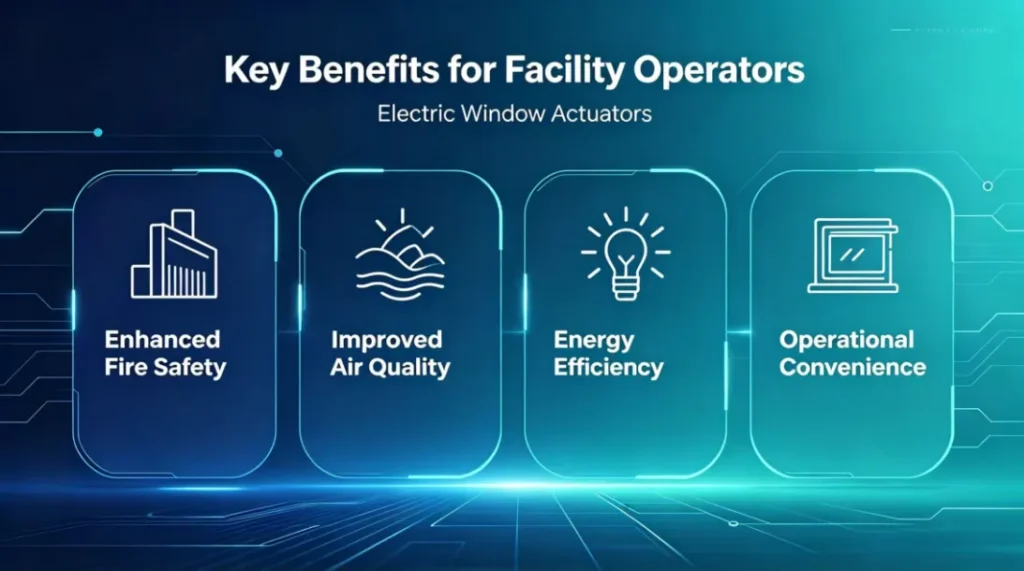
Key Benefits for Facility Operators
Investing in automatic smoke vent windows delivers measurable returns for property owners. Building managers gain significant advantages when they upgrade their ventilation infrastructure with intelligent actuators.
- Enhanced Fire Safety: The actuators open vents automatically during a fire. This action removes deadly smoke from escape routes and improves visibility for firefighters entering the building.
- Improved Air Quality: Automated daily ventilation flushes out stale air and regulates carbon dioxide levels. This creates a much healthier and more productive environment for building occupants.
- Energy Efficiency: Using natural airflow reduces the reliance on heavy mechanical air conditioning systems. Buildings consume less electrical power while maintaining comfortable indoor temperatures.
- Operational Convenience: Users easily control hard-to-reach skylights and high-level facade windows. Facility teams manage the entire building climate without requiring ladders or manual winding gear.
Common Applications in Building Types
Different facilities require specific automation strategies to meet their unique operational demands. Electric window actuators adapt seamlessly to various architectural layouts and regulatory requirements.
- Schools and Educational Campuses
Classrooms require constant fresh air to keep students alert and healthy. Actuators automate high-level windows to provide continuous natural ventilation without creating cold drafts. During emergencies, these systems clear smoke from crowded corridors to ensure safe student evacuation. - Large Commercial Buildings
Corporate offices and retail centers feature expansive glass facades and central atriums. Automated windows manage internal temperatures efficiently by releasing built-up heat through the roof. This strategy significantly lowers cooling costs and creates a comfortable working environment for employees. - Hospitals and Healthcare Facilities
Air quality directly impacts patient recovery and infection control. Healthcare facilities utilize window automation to ensure precise air exchange rates across different wards. Furthermore, automatic smoke vents protect vulnerable patients by keeping critical evacuation routes clear of smoke during fire incidents. - Gymnasiums and Sports Centers
Athletic facilities generate massive amounts of heat and moisture. Facility managers install robust linear actuators on large structural windows to release humid air quickly. This prevents condensation buildup on equipment and provides athletes with fresh, breathable air during intense activities.
Summary
Electric window actuators represent a critical investment in building safety and efficiency. They transform static structures into dynamic, responsive environments. Whether you manage a hospital, school, or commercial complex, upgrading your automatic smoke vent windows ensures regulatory compliance.
Property owners who adopt this technology protect their occupants while optimizing daily operational costs. By leveraging automated natural ventilation, businesses create sustainable, healthy, and highly secure spaces for the future.
FAQ
- Can electric window actuators connect to existing fire alarms?
Yes, you can integrate modern actuators with standard fire alarm control panels. The control system automatically opens the vents the moment a smoke detector triggers an emergency alert. - Do automated windows work during a power outage?
Systems designed for smoke ventilation typically include a battery backup within the control panel. This ensures the windows still open safely even if the main building power fails during a fire. - What maintenance do electric window actuators require?
Facility teams should conduct annual visual inspections and operational tests. You must ensure the moving parts remain free of debris and the control panel batteries hold sufficient electrical charge. - Can I install window automation on older buildings?
Contractors regularly retrofit electric actuators onto existing windows. You simply need to evaluate the window frame strength and route the necessary low-voltage cabling to the designated roof vents. - How much weight can a window actuator lift?
Capacity varies significantly by model and mechanical design. Heavy-duty linear actuators can easily push up to 4,500 Newtons, making them highly suitable for large, industrial rooflights.
Leave a Reply