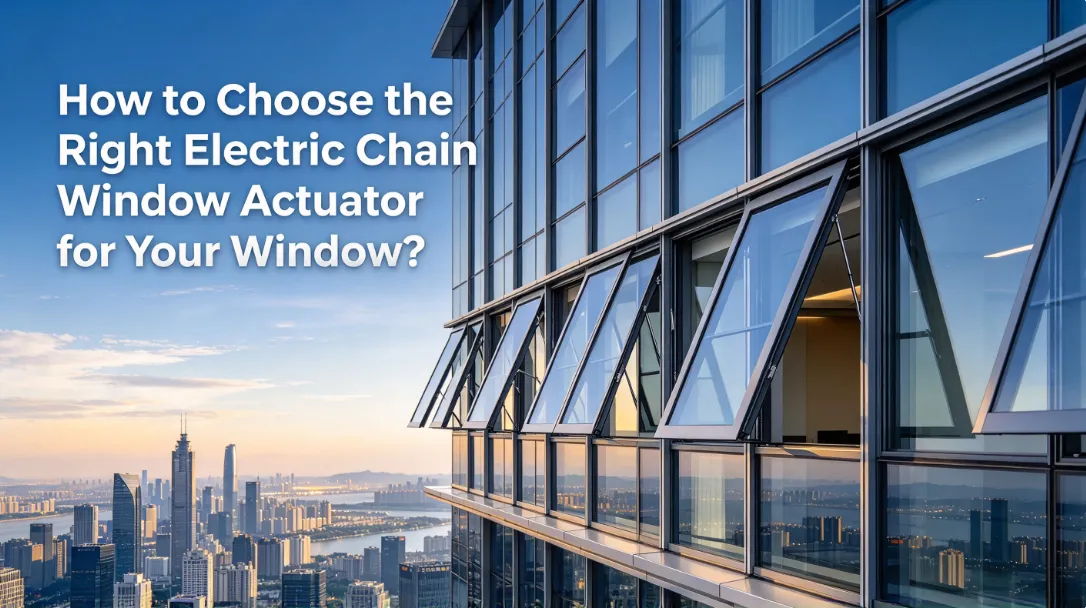
Selecting the correct hardware for automatic smoke vent windows is critical for building safety and daily ventilation. You need reliable systems to ensure proper airflow and emergency smoke extraction. An electric chain window actuator offers a sleek, efficient solution for operating heavy window sashes. But how do you pick the correct one?
This guide breaks down the essential selection process. We will explore window types, physical dimensions, required thrust, and power supply. You will learn how these factors interact. By the end, you will have a clear, actionable checklist to use before contacting a supplier.
Understanding Electric Chain Window Actuators
An electric chain window actuator uses a motorized, rigid chain to push a window open and pull it closed. When closed, the chain retracts neatly into the motor housing, making it ideal for visible architectural spaces. These devices act as the core mechanism for automated climate control and life-safety smoke exhaust systems.
Essential Selection Parameters
Choosing the right motor requires matching the hardware to your specific window design. Every building project has unique demands. You must evaluate several physical and electrical factors to ensure smooth operation.
- Window Type and Sash Size
The design of your window dictates the actuator installation method. Top-hung, bottom-hung, and side-hung windows all require different mounting brackets. You must measure the sash width and height accurately. Wide sashes often need tandem actuators to prevent the frame from twisting during operation.
- Window Weight and Thrust
Thrust is the pushing or pulling force the motor exerts. You calculate the required thrust based on the sash weight and the window style. Heavier glass naturally demands higher thrust capacities. If you select an underpowered motor, the window will fail to open or close securely.
- Stroke Length and Opening Angle
The stroke refers to how far the chain extends from the motor housing. This distance directly determines your maximum opening angle. Automatic smoke vent windows usually require large opening angles to meet fire safety codes. You must calculate the exact stroke needed to achieve this required angle.
- Power Supply Voltage
Electric chain window actuators typically operate on either 24V DC or 110V/230V AC. Smoke ventilation systems generally use 24V DC power because it integrates easily with battery backup systems and fire control panels. Daily ventilation setups often use standard AC power for simpler wiring.
How Actuator Parameters Work Together
You cannot look at these specifications in isolation. They directly affect one another. Understanding these relationships prevents costly specification errors.
- Stroke Length vs. Thrust
As the chain extends further, its structural rigidity decreases. A motor pushing a heavy window with a long stroke requires significantly more internal support. Manufacturers often reduce the maximum push force rating as the stroke length increases to prevent the chain from buckling.
- Sash Height vs. Opening Angle
The height of the window sash limits the opening angle for a given stroke. A 400mm stroke will open a short window to a much wider angle than it would a tall window. You must use trigonometric formulas provided by manufacturers to balance the stroke length with the sash height.
Pre-Purchase Preparation Checklist
Before you finalize your order, you must gather specific project details. Having this information ready helps suppliers recommend the exact model you need. Use the following checklist to prepare your procurement data:
- Window Drawings: Collect architectural elevations and cross-sections showing the frame profile.
- Installation Dimensions: Measure the available space on the frame and sash for mounting brackets.
- Sash Specifications: Record the exact width, height, and total weight of the moving glass and frame.
- Performance Goals: Define the required opening distance or specific angle for smoke ventilation.
- Control Requirements: Specify the voltage (24V DC or AC) and integration needs (fire panels or weather sensors).
- Environmental Factors: Note if the location requires specific IP ratings for moisture or dust resistance.
Conclusion
Selecting an electric chain window actuator requires careful attention to physical and electrical details. By understanding the relationship between stroke, thrust, and window size, you ensure reliable operation. Gather your drawings and measurements early to streamline your procurement process and build a safer, smarter ventilation system.
FAQ
- What is the maximum opening angle for an electric chain window actuator?
The stroke length and sash height determine the maximum opening angle. Most automatic smoke vent windows open between 30 and 90 degrees to meet safety codes. - How do I calculate the thrust needed for my window?
You calculate thrust by evaluating the sash weight, window type, and frame dimensions. A standard formula involves multiplying the weight by the stroke length, then dividing by the sash height. - Can I use standard AC power for smoke vent windows?
Building regulations generally require 24V DC systems for smoke ventilation. Direct current allows seamless integration with fire alarm panels and battery backup systems during power outages. - What happens if the chain stroke is too long for the window?
An excessively long stroke can damage the window hinges or the actuator itself. The chain may bend or buckle under the stress, which compromises the structural integrity of the ventilation system. - Do I need a tandem electric chain actuator for wide windows?
Yes, window sashes wider than 1200mm typically require dual or tandem actuators. Two synchronization chains prevent the window frame from twisting or warping during operation.
Leave a Reply